French Drain Installation
French Drain Installation in Eau Claire, WI
A French drain is one of the simplest and most effective ways to solve a water problem, and one of the easiest to get wrong. Done right, it quietly intercepts water and carries it away from where you don't want it: a soggy yard, a low spot that won't drain, water pressure against your foundation, or a wet basement. Eau Claire Drainage & Waterproofing designs and installs French drains built to work for the long haul, with the slope, gravel, and filtering done properly so they don't clog. Every job starts with a free inspection.
- Licensed & Insured
- Free Inspections
- Locally Owned
- Year-Round Service
The basics
What Is a French Drain and How Does It Work?
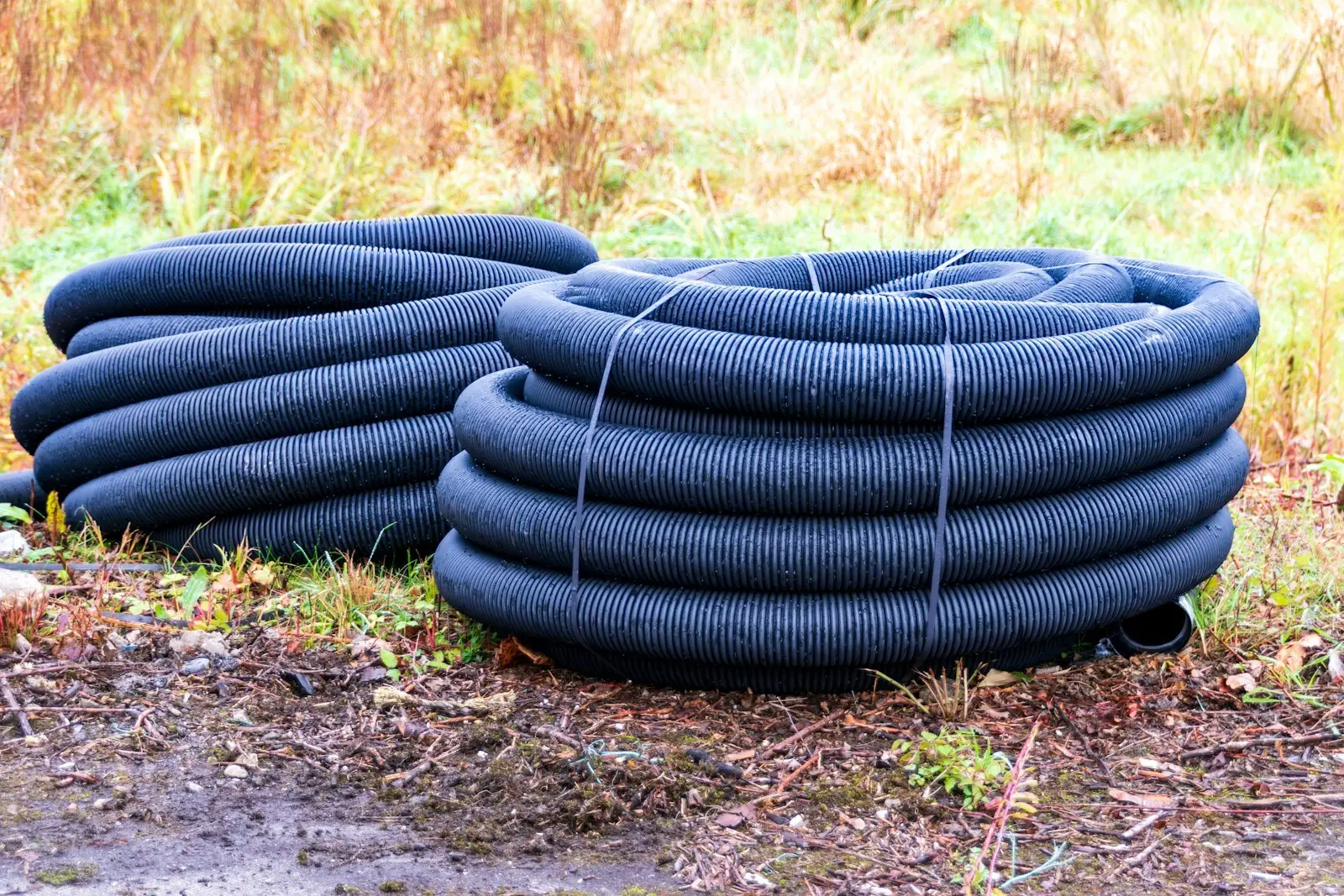
A French drain is a gravel-filled trench with a perforated pipe running along the bottom, usually wrapped in a filter fabric to keep soil and silt out. It works on a simple principle: water takes the path of least resistance. Instead of soaking into saturated ground or pooling on the surface, water flows into the loose gravel and the perforated pipe, which is sloped so gravity carries the water along the trench to a safe discharge point: away from your foundation, out of the low spot, or off your property entirely. There are no moving parts and nothing to power; a well-built French drain just works, redirecting water that would otherwise collect where it causes problems. The key word is "well-built": the slope, the gravel, and the filter fabric all have to be right, which is where a professional installation makes the difference.
Where it helps
Where a French Drain Helps
French drains are versatile, which is why they're one of the tools we reach for most. The common uses around Eau Claire:
Wet yards and standing water
When water collects in a low area of the yard or the lawn stays soggy after every rain, a French drain intercepts it and carries it to where it can drain, turning an unusable wet spot back into usable yard. It's a core part of many of our yard drainage solutions.
Protecting the foundation
Run along the outside of the foundation, a French drain intercepts water in the soil before it can build hydrostatic pressure against the walls, relieving the pressure that pushes water into basements and stresses foundations. This is closely related to a footing drain and is a key piece of foundation waterproofing.
Inside the basement
An interior French drain (drain tile installed around the inside perimeter of the basement at the footing, feeding a sump pump) captures water that's already reaching the basement and routes it out. It's one of the most reliable interior basement waterproofing methods.
Slopes and hillsides
On a sloped lot, a curtain drain (a French drain installed across a slope, above the area you want to protect) intercepts water running downhill before it reaches the house or the low ground, cutting it off at the top.
Types
Types of French Drains
Exterior French drains
Installed in the yard or along the foundation, exterior French drains handle surface and soil water outside the home, redirecting it away from wet areas and the structure.
Interior French drains
Installed inside the basement at the footing and tied to a sump pump, interior French drains manage water that makes it inside, and can be installed year-round since the work is indoors.
Curtain drains
A curtain drain is an exterior French drain positioned to intercept water before it reaches a target area, most often across a slope above a house or yard, cutting off the flow at the source.
When to use one
French Drain vs. Other Drainage Solutions
A French drain isn't always the answer. Part of our job is knowing when it is. A French drain is the right tool when you need to collect water from a broad area or out of the soil and move it elsewhere, or relieve water pressure along a foundation. For water that collects at a single hard surface (the bottom of a driveway, a patio, a specific low point), a catch basin or channel drain that captures surface water is often the better, simpler fix. And sometimes the real problem is just a downspout dumping water in the wrong place, which an extension solves for a fraction of the cost. When we inspect, we recommend the solution that fits the problem, not the most expensive one, and often the best result combines a French drain with one of the others.
Built to last
How We Install a French Drain That Lasts
Most failed French drains fail for the same few reasons: not enough slope, the wrong gravel, no filter fabric, or a poor discharge point. Once a drain clogs with silt or stops carrying water, it's a buried, expensive thing to redo. We install them to avoid all of that. We start by finding where the water is and where it can safely go, then dig the trench with the consistent slope gravity needs to keep water moving. We use the right washed stone and wrap the pipe and gravel in filter fabric so soil and silt can't infiltrate and clog the system. And we make sure the water actually has somewhere to go: a proper discharge point that moves it well clear of the house. The result is a drain you can forget about, because it just keeps working.
Cost
How Much Does a French Drain Cost in Eau Claire?
It depends on the length and depth of the drain, the type (an interior basement drain is a different job from a long exterior run across a yard), how accessible the area is, and where the water can be discharged. The national guides show the same split. Fixr's 2025 French drain guide puts a typical project at $2,800 to $6,500 with a national average of $5,000, a drain through the yard at $20 to $30 per linear foot, a deeper footing-level exterior drain at $80 to $100 per linear foot, and an interior basement drain at $40 to $100 per linear foot. Bob Vila lands on the same $5,000 average with a wider $500 to $18,000 spread. Those are published national figures, not our prices. A short, simple drain is a modest job; a longer system, an interior perimeter drain with a sump, or a run through difficult ground is a larger investment. Rather than guess, we inspect first and give you an upfront price for exactly what your situation calls for. And if a simpler, cheaper fix would solve your problem, we'll tell you that instead.
What to expect
What to Expect
-
Free inspection.
We find where water is collecting or getting in, and where a drain could carry it.
-
Clear diagnosis and quote.
You get a straightforward explanation of whether a French drain is the right fix, where it should go, and an upfront price.
-
Professional installation.
Our licensed and insured crew installs the drain (proper slope, gravel, and fabric) and cleans up the site.
-
Water under control.
The drain carries water away from where it was causing problems, for the long term.
Why us
Why Eau Claire Homeowners Trust Us With Their Drainage
We're local to Eau Claire and the Chippewa Valley, and we install French drains for everything from soggy yards to foundation protection to wet basements, so we know which type fits which problem. We're licensed and insured, our inspections are free and honest, and we build drains to last instead of cutting the corners that cause them to clog and fail. And because we handle drainage, foundation, and basement work, we can see how the water in one part of your property connects to the rest.
FAQ
French Drain FAQs
How does a French drain work?
A French drain is a sloped, gravel-filled trench with a perforated pipe along the bottom, usually wrapped in filter fabric. Water flows into the gravel and pipe instead of pooling or soaking the ground, and the slope carries it by gravity to a safe discharge point away from where it was causing problems. There are no moving parts.
How much does a French drain cost in Eau Claire?
It depends on the length, depth, and type of drain, how accessible the area is, and where the water can be discharged. A short exterior run is a modest job; a longer system or an interior perimeter drain with a sump is a larger investment. We inspect first and give you an upfront price.
What's the difference between a French drain and a channel drain?
A French drain collects water from a broad area or from the soil and moves it elsewhere, which makes it ideal for soggy yards, slopes, and foundation protection. A channel drain (or catch basin) captures surface water at a specific hard spot, like a driveway, patio, or low point, and pipes it away. Many properties use both, and we'll recommend what fits.
What's the difference between an interior and exterior French drain?
An exterior French drain is installed in the yard or along the outside of the foundation to manage water before it reaches the house. An interior French drain is installed inside the basement at the footing and tied to a sump pump to remove water that gets inside. Interior drains can be installed year-round; exterior excavation is seasonal.
Will a French drain fix my wet basement or soggy yard?
In many cases, yes. A French drain is one of the most effective tools for both, whether it's an interior drain handling basement water or an exterior drain carrying water out of a soggy yard or away from the foundation. The right answer depends on where the water is coming from, which a free inspection determines.
Do French drains clog?
A poorly built one can. Without enough slope, the right gravel, and a filter fabric, silt and soil eventually infiltrate and clog the pipe. We install ours with washed stone and filter fabric wrapping the pipe specifically to prevent that, so the drain keeps working for the long term.
Free inspection
Get a Free French Drain Inspection
Whether it's a soggy yard, water pressure against your foundation, or a wet basement, a properly installed French drain may be the fix. Call Eau Claire Drainage & Waterproofing or request a free inspection, and we'll tell you whether a French drain is right for your situation and exactly how we'd install it.