Eau Claire & the Chippewa Valley
Basement Waterproofing & Drainage in Eau Claire, WI
Water in your basement, a soggy yard, or pooling against your foundation? Eau Claire Drainage & Waterproofing finds where the water is coming from and stops it: interior waterproofing, sump pumps, foundation and yard drainage, and French drains. Locally owned, licensed and insured, with free on-site inspections across the Chippewa Valley.
- Licensed & Insured
- Free Inspections
- Locally Owned
- Year-Round Service
Free inspection
Tell us about your water problem
Takes about 60 seconds. We will get back to you within one business day to schedule your free inspection.
Step 1 of 4
When Water Won't Stay Out
Most water problems start small and get expensive. It might be a damp corner after a heavy rain, a musty smell that won't go away, or a chalky white line of residue along the basement wall. Outside, it's a yard that stays soggy for days, or runoff that drains straight toward the house instead of away from it.
None of it fixes itself. Saturated soil keeps pushing water against your foundation, and water always finds the path of least resistance: a hairline crack, a porous block, the seam where the wall meets the floor. Left alone, a minor seep turns into a flooded basement, ruined flooring, and the kind of mold and structural damage that costs far more than the original repair would have.
We handle all of it, from a wet basement to a waterlogged yard, and we start by finding the actual source instead of guessing.
Common problems
Sound Familiar?
Water tends to show up in a few predictable ways around here. If any of these match what you are dealing with, there is a fix for it.
- Water in the basement after heavy rain. Usually surface water and saturated soil pushing in through a crack, the wall itself, or the seam where the wall meets the floor.
- Water that shows up with the spring melt. Snowmelt over still-frozen ground raises the water table and floods basements that stay dry the rest of the year.
- Water coming up through the basement floor. Often a sign of a high water table and pressure under the slab, which an interior drainage system and a sump pump are built to handle.
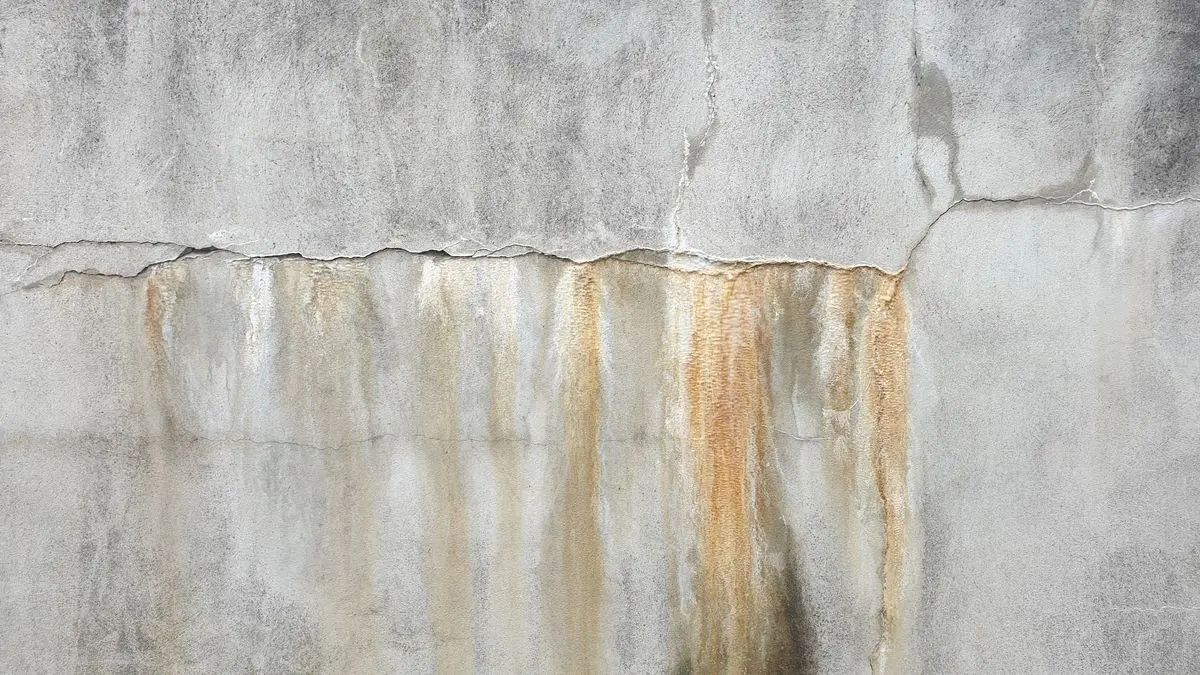
- A musty smell or white, chalky residue on the walls. Both are signs that moisture is moving through the concrete, even if you have not seen standing water yet.
- Standing water or a soggy spot in the yard. A drainage problem outside that is worth solving before it works its way toward the house.
Wherever the water is showing up, we start by finding the source, because that is the only way to fix it for good.
What we do
Our Drainage & Waterproofing Services
Water gets into a home in different ways, so the fix depends on the cause. We offer the full range of interior and exterior solutions for Eau Claire homes, and we'll tell you honestly which one your property actually needs.
Basement Waterproofing
Foundation Waterproofing
Foundation Crack Repair
Sump Pump Installation & Repair
Yard Drainage
French Drain Installation
The mechanics
Why Water Gets Into Eau Claire Basements
Understanding why water shows up is the first step to keeping it out for good. In the Chippewa Valley, a handful of factors work together to push water toward your home, and into it.
Spring snowmelt and a rising water table
Our hardest season for basements isn't summer storms. It's spring. An average Eau Claire winter drops about 55 inches of snow, and it doesn't leave in a hurry: in a normal year there's snow on the ground here for more than three months. When the melt finally comes, all of that water is released over a few weeks onto ground that's still frozen and can't absorb it. The water table rises, the soil around your foundation fills with water, and all of that moisture has to go somewhere. For a lot of Eau Claire homes, "somewhere" turns out to be the basement. Midwinter thaws do the same thing on a smaller scale, which is why basement water here isn't just a warm-weather problem. It's no coincidence the Chippewa's biggest recent crests, in 2023 and 2019, both came in the second half of April.
Hydrostatic pressure
When the soil around your foundation is saturated, it creates hydrostatic pressure, the steady force of standing water pushing against your basement walls and floor. Concrete and block are porous, and that pressure drives water through cracks, through the pores in the material itself, and up through the cove joint where the wall meets the floor slab. The more saturated the soil, the harder the water pushes. It's not only rain doing the pushing, either. When the Chippewa runs high in spring, the water table under the whole valley floor rises with it, which is why the National Weather Service's flood notes for the Eau Claire river gauge list water in downtown basements among the first impacts as the river climbs.
Sandy soil and a shallow water table
Here's something that surprises most homeowners: the city of Eau Claire doesn't sit on clay. The soil survey puts most of town on sandy river outwash, fast-draining sand the Chippewa laid down ages ago. That sounds like good news until you remember what's underneath it: a water table that runs shallow through the valley sands. Rain and melt soak straight down, top up that water table, and push up under your basement floor instead of pooling at the surface. Up on the ridges around the valley it's a different story, silt loam over sandstone that drains slowly and sheds runoff downhill. Two kinds of ground, two kinds of water problem, and the right fix depends on which one your house is standing on.
Grading and downspouts
Sometimes the problem starts at the surface. If the ground around your home slopes toward the foundation instead of away from it, or your downspouts dump roof runoff right at the base of the wall, you're delivering water exactly where you don't want it. These are often the cheapest problems to fix, and the first things we check.
Cracks, cove joints, and window wells
Water only needs a way in. Foundation cracks (even hairline ones), the cove joint, and poorly drained window wells are the most common entry points we see. Identifying exactly where water is getting through is what lets us fix the real problem instead of just managing the symptoms.
The cost of waiting
What Happens When You Wait
A wet basement rarely stays the same. It gets worse, and so does the bill. Water that's seeping in today is already working on everything around it. Standing moisture and humidity feed mold and mildew, which spread behind walls and under flooring and can affect the air your family breathes. Finished basements take the hardest hit: drywall wicks water and crumbles, carpet and padding trap it, baseboards warp, and stored belongings get ruined.
The structure itself is at risk over time, too. The same hydrostatic pressure that pushes water through your walls also stresses them. Frost here drives deep as well, deep enough that state code makes builders set footings at least four feet down, and water that sits against a foundation through those freeze-thaw cycles works into cracks, freezes, expands, and makes them bigger. Efflorescence and persistent dampness are early warnings that water has found a path; left long enough, small cracks and minor seepage can turn into bowing walls and major repairs.
There's a resale cost as well. A damp, musty, or visibly water-stained basement is one of the first things a home inspector flags and a buyer notices, and unresolved water issues can sink an appraisal or a sale.
The good news: almost every one of these problems is far cheaper to prevent than to repair after the fact. Catching water early (sealing the entry point, relieving the pressure, and giving the water somewhere to go) is what keeps a small fix from becoming a structural one. That's exactly what a free inspection is for: finding the problem while it's still small.
Our approach
How We Stop the Water
There's no single fix that works for every home. The right solution depends on where the water is coming from and how it's getting in, which is why we diagnose first and recommend second. Most lasting fixes combine a few of these:
Exterior water management
The best water problem is the one that never reaches your foundation. Regrading, downspout extensions, yard drainage, catch basins, and exterior French drains move surface and roof water away from the house before it can pool and build pressure. For many homes, managing water at the surface solves the problem at the lowest cost.
Interior drainage systems
When water is already finding its way in, an interior solution captures it and routes it out. Interior drain tile installed around the basement perimeter, paired with a sump pump and basin, collects water at the footing and pumps it away from the home. Because this work happens inside, we can install it year-round, even in the dead of a Wisconsin winter.
Foundation and crack repair
Cracks and the cove joint get sealed and repaired so water loses its easy path in. Combined with exterior waterproofing membranes where needed, this protects the structure itself and addresses the entry points directly.
Sump pumps and backups
A sump system handles the water an interior drainage system collects. We install dependable pumps, replace failing ones, and add battery backups so a power outage during a spring storm doesn't leave your basement unprotected.
Drainage
Standing Water and Drainage Problems We Solve
Not every water problem starts in the basement. A lot of them start in the yard, and when the water outside has nowhere to go, it usually ends up working its way toward the house. We handle the drainage side of the problem too, from a lawn that stays soggy for days to runoff that pools against your foundation every time it rains.
Standing water and soggy lawns
If part of your yard holds water long after the rain stops, or a low spot turns into a swamp every spring, the ground is not draining the way it should. We install yard drainage systems, catch basins, and channel drains that collect the water and carry it to a better outlet, and we regrade problem areas so the surface sheds water instead of trapping it.
Water pooling around the foundation
Water that collects against your foundation is the water most likely to end up inside. It builds pressure against the wall and finds any crack or seam it can. The fix usually starts at the surface, with grading and downspout extensions that move roof and surface water away from the house before it has the chance to pool and push its way in.
Downspouts dumping at the house
Gutters do their job right up until the downspout drops everything at the base of the wall. Extending your downspouts and tying them into a proper drainage line carries that roof water out and away, and it is one of the simplest and most affordable fixes we do.
French drains
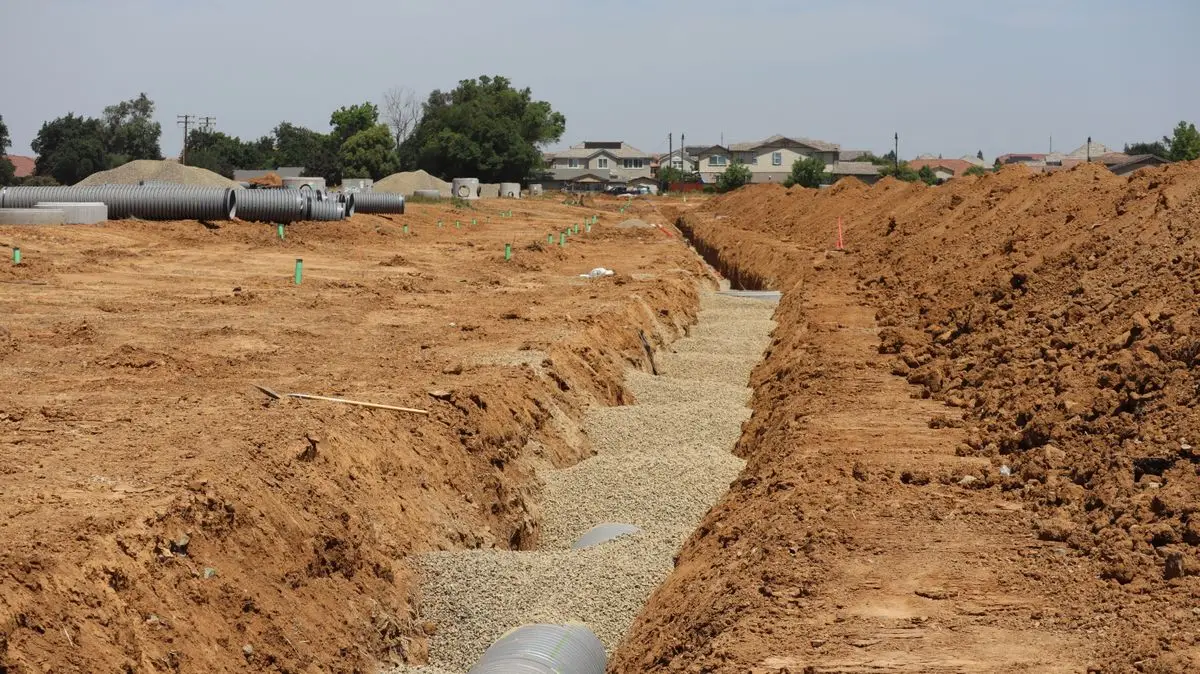
When water needs to be intercepted and carried off, a french drain is one of the most effective tools for the job. It is a perforated pipe set in gravel that gives water an easy path to follow, away from your foundation or out of a wet section of yard. We install both interior and exterior french drains depending on where your water is coming from.
When the water is collecting outside, solving it there is often the cheapest way to keep it from becoming a basement problem later.
Cost
What Affects the Cost of Fixing a Water Problem
The honest answer to "what will this cost" is that it depends on what is causing the problem and what it takes to fix it for good, and the only way to know for sure is to look at it. That said, a few things drive the price on every job. The source of the water matters most, because correcting a downspout and regrading a low spot is a far smaller job than installing a full interior drainage system with a sump pump. The size of the area, how the water is getting in, and whether the work happens inside or requires excavation outside all factor in too. Interior work tends to cost less and can be done year round, while exterior excavation is a larger, seasonal job. We inspect first, explain what is actually driving the problem, and give you a clear price before any work starts, so you are never left guessing and there are no surprises. If your problem turns out to be a simple one, we will tell you that. For the published national ranges and what moves the number here, see our basement waterproofing cost guide.
Our process
What Working With Us Looks Like
We keep it straightforward.
-
Free on-site inspection.
We come out, look at your basement, foundation, and yard, and find where the water is actually coming from. No charge, no pressure.
-
Honest diagnosis and a clear quote.
You get a plain explanation of the problem and the solution we recommend, and why, along with an upfront price. If the fix is something simple, we'll tell you that.
-
The work, done right.
Our licensed and insured crew installs the solution and cleans up after themselves.
-
A dry basement and yard.
The water goes where it's supposed to, and your home stays protected.
Local
Serving Eau Claire & the Chippewa Valley
We're local. Eau Claire Drainage & Waterproofing works with homeowners throughout Eau Claire and the surrounding Chippewa Valley, including Altoona, Chippewa Falls, Menomonie, and Lake Hallie. This is a river town. The Eau Claire meets the Chippewa right downtown, Half Moon Lake on the west side is an old channel the river cut off and left behind, and a lot of the city stands on the sandy flats in between. We know which streets sit low along the water, and we know the foundations: about one in six Eau Claire homes was built before 1940, and in the oldest neighborhoods, the Third Ward and around Randall Park, that can mean stone or rubble walls that let water work through the joints. The freeze-thaw cycles, the spring melt, the sand with water moving underneath it. We deal with the same conditions you do, and we build our solutions around them.
- Eau Claire
- Altoona
- Chippewa Falls
- Menomonie
- Lake Hallie
Why us
Why Eau Claire Homeowners Call Us
-
Locally owned and operated. We live and work in the Chippewa Valley, and we treat your home the way we'd treat our own.
-
Licensed and insured. The work is done by a licensed, insured crew, so you're protected and the job is done to standard.
-
We find the real problem. Water has a source. We diagnose where it's actually coming from instead of selling you a fix you don't need.
-
Free, no-pressure inspections. We'll come out, take a look, and give you an honest assessment at no cost.
-
Interior and exterior solutions. Because we do both, we recommend what your home actually needs, not just the one service we happen to offer.
-
Year-round service. Interior waterproofing and sump work don't stop for winter, so neither do we.
FAQ
Frequently Asked Questions
Why is water getting into my basement?
Usually it's a combination of saturated soil and hydrostatic pressure pushing water through cracks, porous concrete or block, or the cove joint where the wall meets the floor. In Eau Claire, spring snowmelt and the shallow water table in our sandy valley soils make it worse. The only way to know for sure is an inspection. We find the specific entry point and the source behind it.
Do you offer free inspections?
Yes. We come out to your home, assess your basement, foundation, and yard, identify where the water is coming from, and give you an honest diagnosis and quote at no charge.
How much does basement waterproofing cost in Eau Claire?
It depends on the cause and the solution. A downspout and grading fix is very different from a full interior drainage system with a sump pump. That's why we inspect first and give you an upfront price before any work begins, so you know exactly what you're paying for. See what the national cost guides publish, and what moves the number here.
What's the difference between interior and exterior waterproofing?
Exterior solutions (grading, drainage, French drains, waterproofing membranes) keep water away from the foundation before it gets in. Interior solutions (drain tile, sump pumps, crack repair) capture and remove water that's already reaching the basement. Many homes need a combination, and interior work can be done year-round. Read our full interior vs. exterior comparison.
Can you fix standing water in my yard?
Yes. Standing water and soggy lawns are usually a grading or drainage issue. We install yard drainage systems, catch basins, French drains, and downspout extensions, and regrade where needed to move water away from your home and out of the low spots.
Do you install and repair sump pumps?
Yes: new installations, replacements, repairs, and battery backups. A sump pump removes the water an interior drainage system collects, so keeping it reliable, and backed up for power outages, is critical during spring storms.
Do you work in winter?
Yes. While exterior excavation is seasonal, interior waterproofing, sump pump work, and crack repair can be done year-round, and winter and early spring are actually when many basement water problems first show up.
How do I get water to drain away from my house?
Most of the time it comes down to grading and downspouts. If the ground slopes toward the house, or your downspouts release right at the base of the wall, water collects exactly where you do not want it. Regrading those areas and extending the downspouts, sometimes tied into a french drain or catch basin, moves the water out and away. We pinpoint where it is collecting and why during the inspection.
Why is my yard always wet or holding standing water?
A yard that stays soggy usually has a drainage problem. It could be a low spot, compacted ground that drains slowly, or runoff that has nowhere to go. We install yard drainage systems, catch basins, and french drains, and regrade where needed, so the water has a path to follow instead of sitting on your lawn.
What is a french drain, and do I need one?
A french drain is a perforated pipe set in a gravel-filled trench that gives water an easy path away from a problem area. It is one of the most effective ways to relieve water pressure around a foundation or dry out a wet section of yard. Whether you need one depends on where your water is coming from, which is what the inspection determines.
Can you fix water pooling around my foundation?
Yes, and it is one of the more important problems to solve, because water against the foundation is the water most likely to get inside. The fix usually starts with grading and downspout extensions to move surface and roof water away, and it may include an exterior drain where the situation calls for it.
Do you handle both the basement and the yard?
Yes. Because we do interior waterproofing and exterior drainage, we can look at how water moves across your whole property, from the yard to the foundation to the basement, and fix the actual source instead of just one piece of it.
Where is sump pump water allowed to drain in Eau Claire?
In Eau Claire, sump pump water has to stay out of the sanitary sewer. City code prohibits discharging groundwater into the sanitary system, and it separately prohibits connecting a sump pump or foundation drain to your building's sewer line. The water should go out onto your own ground or, where one is available, into the storm sewer. Two practical rules: send the discharge far enough from the house that the water doesn't just cycle back into your sump, and keep it off the sidewalk, because city code also prohibits creating ice hazards there in winter. We set up compliant discharge as part of every sump pump installation.
Free inspection
Get Your Free Inspection
If there's water in your basement, pooling against your foundation, or standing in your yard, don't wait for it to get worse. Call Eau Claire Drainage & Waterproofing or request a free inspection, and we'll find the source and tell you exactly how to fix it.